Showing posts with label BP. Show all posts

Saturday, 6 April 2013

Understanding Blood Pressure Readings – Know your Numbers


Understanding Blood Pressure Readings  Know your Numbers


Do you know what your blood pressure is and what it means?


If  you answer “no,” and might be wondering why you need to know that…..Right, then please read on and do get your BP checked.


Blood pressure refers to how much force your blood is putting on the walls of the arteries in your body. When there is a large amount of force on the walls of your arteries it is called high blood pressure, or hypertension. High blood pressure or hypertension is a disease and is often called the “silent killer” because symptoms are often not felt or noticed by the person who has the disease.


It is very important for you to know what your blood pressure is so that you can take action to keep yourself healthy.


For now, concentrate on what your blood pressure is, and in what category your reading places you.


NORMAL BP
Starting at age 20, the American Heart Association recommends a blood pressure screening at your regular healthcare visit or once every 2 years. A normal systolic pressure is less than 120, and a normal diastolic pressure is less than 80. What this means is that a normal blood pressure would be anything less than 120/80. If even one of your numbers is higher than what is considered normal, you should think about making some lifestyle changes.


PRE HYPERTENSION 
If your blood pressure is between 120/80 mmHg and 139/89 mmHg, then you have prehypertension. This means that you don't have high blood pressure now but are likely to develop it in the future. You can take steps to prevent high blood pressure by adopting a healthy lifestyle. However check it at least every year or more often as your doctor suggests.


HIGH BP  
If your blood pressure reading is higher than normal, a single high reading does not necessarily mean that you have high blood pressure. However, if readings stay at 140/90 mm Hg or above over time, your doctor will likely want you to begin a treatment program. Such a program almost always includes lifestyle changes and often prescription medication.

HYPERTENSIVE CRISIS
If, while monitoring your blood pressure, you get a systolic reading of 180 mm Hg or higher or a diastolic reading of 110 mm HG or higher, you should seek immediate emergency medical treatment for a hypertensive crisis or have someone drive you to the hospital right away.


Take care Get your blood pressure mointored regularly.

Friday, 5 April 2013

What Can Happen If High Blood Pressure Is Left Untreated?


The Theme of  World Health Day 7th april  is high blood pressure, let us know 
“What Can Happen If High Blood Pressure Is Left Untreated?”


High blood pressure is often called the silent killer, as people with high blood pressure do not usually have any symptoms until the disease has reached an advanced stage.The lack of symptoms is why some people who are aware they have high blood pressure do not take any steps to control and treat it. Because they feel okay they think everything is okay. But if high blood pressure is left untreated, serious problems may develop over time. 

Lets have a look at the damage a high blood pressure can cause if left untreated.
 
Heart Damage
The heart has to work harder to push blood through narrowed vessels. As the pressure persists or increases, the heart begins to get fatigued, over time, this additional work enlarges the heart and decreases its ability to contract.The enlarged heart also demands more blood supply, making it more vulnerable to insufficiency in blood flow and prone to heart attacks.
    

Stroke

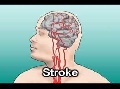
Untreated hypertension can lead to stroke. As blood pressure increases, the pressure on the blood vessels increases. The vessels in the brain are very sensitive to this increased pressure. Eventually, a weak area of a vessel will rupture, causing bleeding in the brain. It can not only lead to heart stroke but also to brain stroke i.e paralysis.

Kidney Failure
High blood pressure can damage blood vessels throughout the body. If blood vessels in the kidneys are damaged, the kidneys are less able to do their job of removing waste and fluid from the body. This accumulated fluid can cause your blood pressure to increase even more. Eventually, your kidneys may fail completely. This is called kidney failure.


Effect on memory and mental function. 


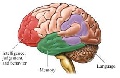
Some research indicates that untreated high blood pressure is associated with the loss of mental ability in older people. Older adults with untreated high blood pressure may have short-term memory loss. They may have trouble with their attention span, too. Also, common are forms of dementia, such as Alzheimer's disease. The higher your blood pressure, the greater your risk for loss of mental ability. Getting treatment for high blood pressure may improve mental functioning.

Peripheral artery disease
It is a condition of the blood vessels that leads to narrowing and hardening of the arteries that supply the legs and feet.The narrowing of the blood vessels leads to decreased blood flow, which can injure nerves and other tissues.Peripheral artery disease is caused by arteriosclerosis, or "hardening of the arteries." This problem occurs when fatty material (plaque) builds up on the walls of your arteries. It blocks the  blood flow to your legs can cause pain and numbness.

According to the American Heart Association, one out of every three adults (33%) suffers with elevated blood pressure,People with a systolic BP of 120 to 139 mm HG or a diastolic BP of 80 to 89 mm HG are considered borderline hypertensive and require immediate changes in diet and lifestyle.
That is why having blood pressure checked regularly is important.