Showing posts with label onion. Show all posts

Saturday, 4 May 2013

onion raita

ONION RAITA

A cooling raita for summer which also helps in reducing BP n Cholesterol

Ingredients

½ kg curd
2 onion finely chopped
1 green chilli, finely chopped
1 ginger, finely chopped
Coriander leaves finely chopped
1/2tsp oil
Mustard seeds
1tsp salt

Method

1.Beat the curd well.


2.Add chopped onion, green chilli, coriander leaves and salt.
3.Heat oil in a large spoon. Add mustard seeds.
4.Add it to the raita and mix well.
5.Refrigerate the raita for 1-2 hrs before serving.


Friday, 3 May 2013

Nutritional Benefits of Onions

Nutritional Benefits of Onions

Never mind the tears they bring on—onions are a great companion in your fight against disease. A prized member of the lily family, they lavish you with health benefits while adding oodles of taste to your food.

A quick glimpse at their incredible health benefits:

Onions contain a high amount of polyphenols, a type of 
phytonutrient, which includes disease-protecting flavonoids 
and tannins. In fact, onions are one of the most polyphenol-
packed foods you can eat.
  
Onions due to its high sulphur content prevents body fevers 
that can be caused due to sun stroke.
   
Decrease high cholesterol and blood pressure levels.
Reduce the risk of developing colon and other cancers.

Reduce inflammation.

Quercetin, an antioxidant found in green onions, offers 
anti-inflammatory, anti-histamine benefits and  is known to 
play a significant role in preventing cancer. Green onions
are rich in vitamin C which not only boosts immunity, but 
offers protection from cardiovascular disease, eye disease, 
and skin wrinkling.
Onions are rich in chromium, an essential mineral used by 
the body to regulate glucose and for the metabolism and 
storage of macronutrients. Thus onion help to lower blood 
sugar.
Other nutrients found in onions include fiber, manganese, 
vitamin B6, potassium and copper.
It is mainly used as a traditional medicine for common cold.

It stimulates the respiratory tract and helps in expelling 
sputum (phlegm).
Do you enjoy sliced, chopped onions with your food? If yes, 
rejoice! Raw onion encourages the production of good 
cholesterol (HDL), thus keeping your heart healthy.

Thursday, 2 May 2013

The Difference between Yellow, White, Red Onions and Green onion

The Difference between Yellow, White, Red Onions and Green onion
Onions belong to the Allium family

If you’ve ever been in the grocery store buying onions Or cooking and couldn’t figure out which color of onion to buy or use inyour recipe, you’re not alone. … dont’ worry. There are many onions out there, each with their different purposes, but typically with the same health benefits. Although there are many types onions, the general rules for them are as follows.

Yellow Onions


Yellow onions have a yellow-brown papery skin on the outside and a white flesh. Yellow onions are the most popular cooking onions because they add excellent flavor to most stews, soups, and meat dishes
Eyes start to water when someone is cooking with yellow onion is due to an effect of higher sulfur content. Because the yellow onion has such high sulfur content, it has a more pungent flavor and smell, which typically makes it too strong to eat raw unless there are other ingredients to counter-balance the flavor.

White Onions


White onions have an all-white skin. They have a slightly milder flavor than the yellow onion and are a great substitute if you’re in need of an onion flavor, but don’t want it to be too powerful. White onions are commonly used in Mexican cuisines.

Red Onions


You’re most likely to see red onions in non-cooked dishes, such as salads and sandwiches. Of the different colored onions, the red onion is the most mild, sweet onion. Red onions have the purplish-red skin which color is layered though it’s white flesh.

Green onion

Green onions are a young bulb onion with long leaves that are pulled from the ground before the bulb is fully mature. Commonly known as green onion, spring onion, or salad onion. Because they will not dominate the flavor of a dish, they are commonly used in salads, sandwiches, soups and stir-fry dishes, in Chinese cuisine. Green onions can be eaten raw or cooked.

How to Pick a Good Onion

In general, when you’re choosing onions in the store, the best ones will be firm, have a crackly outer skin, and have a mild scent. Decaying onions will give off distinct foul odor and should be discarded immediately. Any onions that have soft spots or feel less than firm should be discarded.

On another note, onions tend to store better in a slightly cooler, darker area, although the fridge is not recommended except for green onion.


Watch out for health benefits of onion in the coming post 


Wednesday, 1 May 2013

Onions and sunstroke

Onions and sunstroke


Have u heard of farmers keeping an onion with them while working in blazing hot sun………n also eating lot of onions do u know the reason behind this? 

Onions due to its high sulphur content prevents body fevers that can be caused due to sun stroke. Eat atleast 2-3 onions a day especially if u r out in sun to prevent sunstroke.


Watch out for the difference between yellow, white, red onions and its benefits in the coming post.

Thursday, 4 April 2013

AN EXCELLENT SALAD TO PREVENT SUNSTROKE AND REDUCE BP AND CHOLESTEROL


AN EXCELLENT SALAD TO PREVENT SUNSTROKE AND REDUCE BP AND CHOLESTEROL


An excellent salad to prevent sunstroke.

Mix finely chopped pieces of raw mango and onion together, add chopped green chillies, a dash of rock salt, a pinch of turmeric and red chilli powder, garnish with coriander leaves and serve.

Onion due to its high sulphur content prevents body fevers that can be caused due to sun stroke.Raw Mango is excellent for preventing sun stroke.

Apart from this, raw mango gives vit C and potassium and onion helps in thinning of blood, so this salad also helps to reduce BP and cholesterol.
  ENJOY A SALAD WITH DUAL BENEFITS

Wednesday, 21 March 2012

Foods to prevent sunstroke

Foods to prevent sunstroke

The blazing hot sun of summer brings sunstrokes. These foods can help you protect yourself

Nature bestows its right foods to help the body beat the heat. Being outdoors and working all day can lead to sunstroke and dehydration. The following foods should be included in your daily diet during the summer months.


Raw mango

 It is excellent for preventing sun stroke. Also, it is high in Vitamin C thereby increasing immunity and preventing the common summer cold. It helps in preventing anaemia, TB and typhoid. Ever wondered how essential your aam ka achaar and kachi kairi (raw mango) ki chutney and panha is in the summer? No wonder the housewives are busy stocking these up! Add raw mango to your salad, poha, upma or chew on it raw with a little salt and red chilli powder.


 Buttermilk

 Sweating, muscle cramps, nausea, headaches, sunburn – sip on the buttermilk, whipped yoghurt with chilled water garnished with cumin and mint. It is a good cure for summer diarrhoea caused due to excessive heat. Its pro-biotic properties suit the intestinal tract.
 
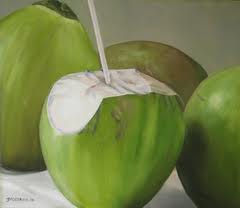
Coconut water
Rightly called the ‘fluid of life’ coconut is a wonder food. Tender coconut water is the natural isotonic beverage with almost the same level of electrolyte balance as we have in our blood. Here is how it is excellent for the summer:
  • Oral rehydration medium – high in magnesium, potassium, saline and natural sugar. Popular with athletes.
  • Keeps the body cool.
  • Application on the body prevents prickly heat and summer boils and subsides the rashes. 


 Onions
Onion due to its high sulphur content prevents body fevers that can be caused due to sun stroke. Farmers in Gujarat and Rajasthan keep an onion below their cap to keep the heat from getting to them.

Lemon
Extremely great for the summer, it is worth squeezing a lemon to make a fresh-fruit drink because lemon ranks high as a health food. It contains very few calories. A low intake of vitamin C makes people more susceptible to infection and lemon is high in Vitamin C content. You can get rid of dizziness or nausea, which is common during the summer due to the scorching sun, by sucking on lemon or sipping its juice.

Lemon juice also makes an effective thirst-quenching drink in fevers, measles, and pox. Lemon is regarded as a youth restorative.

HYDRATE WELL THIS SUMMER TO KEEP STROKE AT BAY