My article on the secret to eating healthy and losing weight! featured in health.india.com.
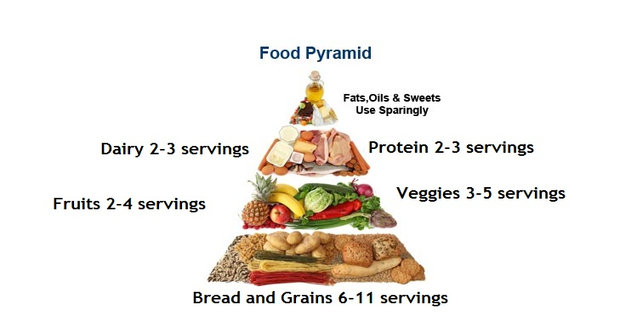
The pyramid can be broadly categorised into four levels. As we move up we have to consume less of that particular food item. Consuming more food items which are on top is responsible for obesity and a host of other-related disorders. At the bottom is theCereal and Grains group followed by Fruits and Vegetables group, Dairy products and Non-Veg and finally Oils, Fats and Sugars, which you should consume the least.
1. Cereal and Grains group (Energy rich group)
Now this group forms the staple of diets across the world and comprises of nutrients like carbohydrates, proteins, fibre, minerals, calcium and B-complex vitamins. You should ideally have 6-11 servings of food from this group in a day.
Common food items in this group: Whole grain cereals, millets, rice, jowari, bajra, makai, barley oats, poha and upma.
One serving of this equals
- 1 cup of rice, poha or upma
- 1 cup of oats
- 1 paratha
- 2 phulka
- 1 jowar, bajra or makai roti
2. Vegetables and Fruits group (Protective Food Group)
This group consists of all the food items that dietitians, nutritionists, doctors, parents and elders keep on forcing kids to eat but they seldom listen. One should have at least 3-5 servings of veggies and 2-4 servings of fruits each day. They contain extremely vital nutrients like vitamins, minerals, antioxidants, folate, iron and potassium.
One serving of veggies consists of:
- 1 cup of raw leafy vegetables
- 1 medium potato/yam, ½ medium sweet potato
- 1/2 cup of other vegetables, cooked or raw
- 3/4 cup of vegetable juice
In fruits one serving is:
- One medium apple, orange or banana
- 1/2 cup of chopped, cooked or canned fruit
- 3/4 cup of fruit juice
3. Dairy products and non-veg food items (Bodybuilding group)
This group is known as the bodybuilding group because of its importance in maintaining the strength of our bones, muscles and other parts of our structure. This group provides proteins, B-complex vitamins, invisible fat, fibre, calcium, vitamin A, riboflavin, vitamin B12, iron and iodine. You should ideally have 4-6 servings of this group each day. One serving of this group consists of:
- 1 cup of milk, curd
- 40g (2 slices) cheese, paneer
- 1 cup dal, pulses, sprouts
- 1 handful of dry fruits, nuts like groundnuts
- 1 Egg
- 65-100gm cooked meat/chicken (½ cup mince, 2 small chops, or 2 slices roast meat)
- 80-120g cooked fish fillet
4. Oils, fats and sugar
This is the bad group consisting of food items that are responsible for obesity and its related ailments like heart disease, diabetes, hypertension, cholesterol build-up and all the other lifestyle diseases that are causing havoc in our society. They have sadly become omnipresent in many people’s diets. Think of any junk food item and it will contain these ingredients – burgers, pizza, vada pav, samosa, fizzy drinks, alcohol, instant noodles, chips, frankies etc. I am not saying you shouldn’t eat these items at all – the body needs them too – but in moderation. One should NOT have more than 3-4 servings of these food items in a day. Some common basic sources are vegetable oils, butter, sugar, jaggery and honey.
One serving is defined as 1 tsp of oil, ghee or butter and also 1 tsp of sugar jaggery and honey.
Things to keep in mind
Make the right choices
It’s important to choose a variety of foods in amounts appropriate for a person’s age, gender, physiological status and physical activity. You need to choose food items from each food group to meet your nutritional requirements. It’s a good idea to include as many different food items as possible because it will stop things from getting boring.
Limit or reduce
There’s no getting away from the unpleasant things in life and this includes things you need to limit or reduce:
- Saturated and trans-fats
- Salt intake – Ensure that meals are cooked with minimum salt. Also check packaged food items for their sodium levels before consuming.
- Limit calorie intake from foods with added sugars. Select products that contain less added sugar or choose a small portion.
- Your intake of simple carbs from refined food sources like breads, biscuits, cakes, pastries.
- Portions of high-calorie fried foods
Select the best at each level
Even while choosing food items from a certain level on the pyramid you can make healthier choices. Here are some smart choices:
- Switch to whole grain foods like brown bread and brown rice
- Eat seasonal and local veggies and fruits aplenty
- Make sure you consume some dark green leafy vegetables everyday
- Make sure you have a colourful plate with oranges, red veggies, fruits like carrots, papaya, mangoes, pomegranates, tomatoes, watermelons, plums especially when in season as these food items are rich in vitamin A
- Use jaggery or honey instead of sugar
- Choose healthy fats found in almonds, walnuts, flaxseeds and vegetable oils
- Choose low-fat, protein-rich foods such as lean meat, fish and low-fat milk.
- Whip up dishes with a combination of whole grains, pulses, grams and veggies to make pulav, parathas for complete nutrition.
You should also strive to consume more home-cooked meals instead of eating out. Whenever we eat out we have the tendency to over-eat. Carry packed lunches, plan your meals in advance, and experiment with healthy recipes and ingredient substitutions. Developing healthy eating habits is a way of life. It isn’t just about going on crash diets to lose weight.
Source:-http://health.india.com/fitness/the-food-pyramid-the-secret-to-eating-healthy-and-losing-weight/